

18 Aug 2021
Simon Holmes, Director, Portfolio Manager, Multi Asset Solutions
As active multi-asset investors, we always keep a close watch on near-term, top-down developments, where we believe our tactical approach could help us stay ahead of markets. But we put equal importance on our bottom-up, stock selection, which can highlight exciting opportunities for longer-term sustainable investing.
It is important to remember that buying sustainable investment funds doesn’t simply mean buying wind turbines or solar panels. A more sustainable world won’t be achieved through renewable energy alone. Here we examine 3 interesting sustainable themes that you probably didn’t realise already affect your daily lives!
As workers are encouraged to return to the office, city skyscrapers will begin to fill back up with workers. The government sees this as positive for revitalising city centres, but buildings do have a dark side. They are a major contributor to greenhouse gas emissions, responsible for 39% of global emissions, more than the entire transport sector.1 To meet the Paris Agreement goal of limiting global warming to well below 2°C, all buildings must be net zero carbon by 2050. But fewer than 1% are today. This creates a huge runway for companies like Schneider Electric, a global leader in buildings’ energy transition and automation. Their solutions are positioned at the forefront of the decarbonisation story in this end market. Schneider’s products are embedded in projects from design through to implementation and maintenance, making them indispensable to the positive energy outcome for buildings, and therefore widening the ‘economic moat’ around the business. We believe this to be a win/win/ win situation: for their customers, the planet and the company itself, because their economics are significantly enhanced in the process, as the mix moves towards higher margin software and services.
2050 To meet the Paris Agreement goal of limiting global warming to well below 2°C, all buildings must be net zero carbon by 2050.
Companies are already planning for employees to return to the workplace and the implications of a new hybrid model for working. Covid forced nations into working from home and this highlighted that cities need not have offices packed full of people. However, this may mean fewer people commuting on trains into big cities but more people buying cars to drive round their home towns.
Innovative mobility and energy solutions are at the heart of what makes cities sustainable. Transportation is responsible for 24% of direct CO2 emissions from fuel combustion.2 Electric vehicles (EVs) swerve this problem – and we appear to be at the cusp of mass adoption, with Covid potentially having just nudged us over the edge. Whilst global new car sales dropped by 30% in 2020, EV sales boomed: in Europe, EV volumes jumped 45% year-on-year. Even within the year itself, the electrification process accelerated, with EVs hitting a 16% share of new sales in November 2020, something that would have been utterly unthinkable even a couple of years ago.3 The battery-powered vehicles market share now stands at 11%,4 which is far ahead of expectations, and with a long way still to go.
We believe Dutch company Alfen will play a key role in unlocking the EV opportunity as one of the leading European manufacturers of EV charge points. They have an enviable first-mover advantage in key countries and a wealth of knowledge in their legacy smart grid business, which makes them particularly well positioned to enable the transition by removing the last hurdle to adoption: range anxiety. And we are just at the beginning of the road: to reach the Paris Agreement goals, EVs must make up 50% of the market by 2030.5 Some markets may need to catch up more than others, but regulatory support for a total transformation of the sector will only serve to push adoption further.
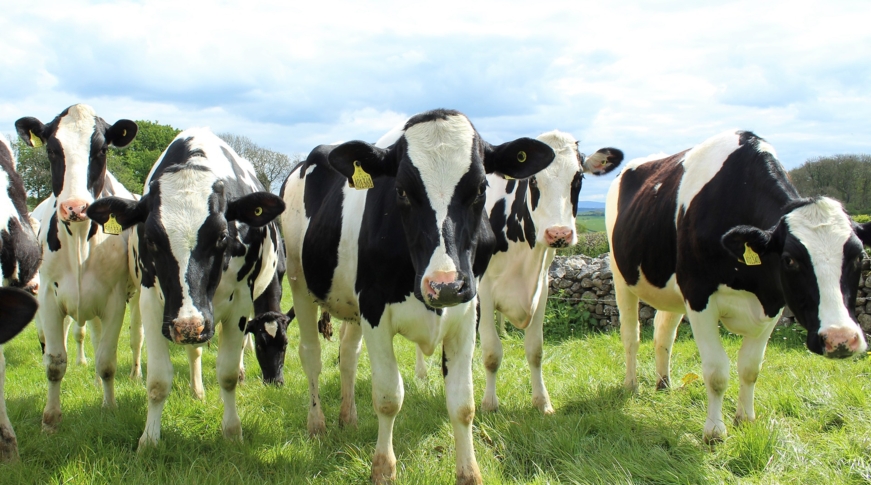
Really..? Yes! Cows produce around the same amount of greenhouse gases as cars, so is a significant problem to be tackled. Although there may be health benefits from cutting our red meat intake, produce such as milk and yoghurt are rich in calcium and other nutrients that our bodies need to stay healthy, so it is not feasible to assume that cows can be eliminated from our food chain. DSM, a Dutch company, which derives 80% of its revenue from its nutrition business, has developed a ‘clean cow enzyme’ which cuts the amount of methane produced by 45% to 60%. This product alone is potentially worth €1billion to €2billion and is linked to Sustainable Development Goal 2 – Zero Hunger. So, whilst we are aware that tactical challenges remain for multi-asset investors in the second half of 2021, we are excited about the acceleration of longer-term sustainable themes and the opportunities these present for active multiasset portfolios.
If you would like more information about low cost, active multi-asset investing, please contact a member of the BMO Sales Support team.
Risk warnings
The value of investments and any income derived from them can go down as well as up as a result of market or currency movements and investors may not get back the original amount invested.
Views and opinions have been arrived at by BMO Global Asset Management and should not be considered to be a recommendation or solicitation to buy or sell any companies that may be mentioned.
The information, opinions, estimates or forecasts contained in this document were obtained from sources reasonably believed to be reliable and are subject to change at any time.
1 Global Status Report for Buildings and Construction 2019, International Energy Agency
2 International Energy Agency, 2020
3 Fleet Europe, 2021
4 Pure EV and Hybrid
5 Climate Action Tracker, 2016